
Capital Budgeting: A Detailed Exploration of Corporate Investment Decisions

Any deviation in an estimate from one year to the next may substantially influence when a company may hit a payback metric, so this method requires slightly more care on timing. In addition, the payback method and discounted cash flow analysis method may be combined if a company wants to combine capital budget methods. The capital budgeting process is a measurable way for businesses to determine the long-term economic and financial profitability of any investment project. Therefore, businesses need capital budgeting to assess risks, plan ahead, and predict challenges before they occur. The IRR is an indicator that helps determine the growth potential of an investment. A target company with an IRR surpassing the required rate of return is considered an attractive acquisition, as it indicates a higher return on investment.
Reduced manual errors in financial analysis
Subsequent to cash flow forecasting, a risk assessment of the project gets carried out. This brings into account different forms of uncertainties and risks that might affect the performance of the project. These can include factors such as market risks, regulatory risks, technology risks, and financial risks. Each risk is identified, quantified where possible, and strategies are developed to manage or mitigate them. This step ensures a comprehensive understanding and management of the risks linked to the investment before making any decisions.
Significance of time value of money in capital budgeting techniques
These capital budgeting decisions will not only serve to satisfy ESG criteria, but can also enhance company reputation and foster greater investor confidence. In summary, capital budgeting serves not just as a financial tool, but as a strategic guide. Its role in long-term investment decisions, managing capital structure, and enabling a thorough fiscal performance review is instrumental in a firm’s strategic financial management. After the potential risks have been assessed, they must be integrated into the investment decision-making process.
Faster project evaluation through automated processes
The discounted cash flow method is replete with complex calculations that many analysts find difficult to perform. This method is most suitable for long-term finance capital expenditure decisions. The method lays emphasis on accounting profit and no thought is given to cash inflows by the use of capital projects.
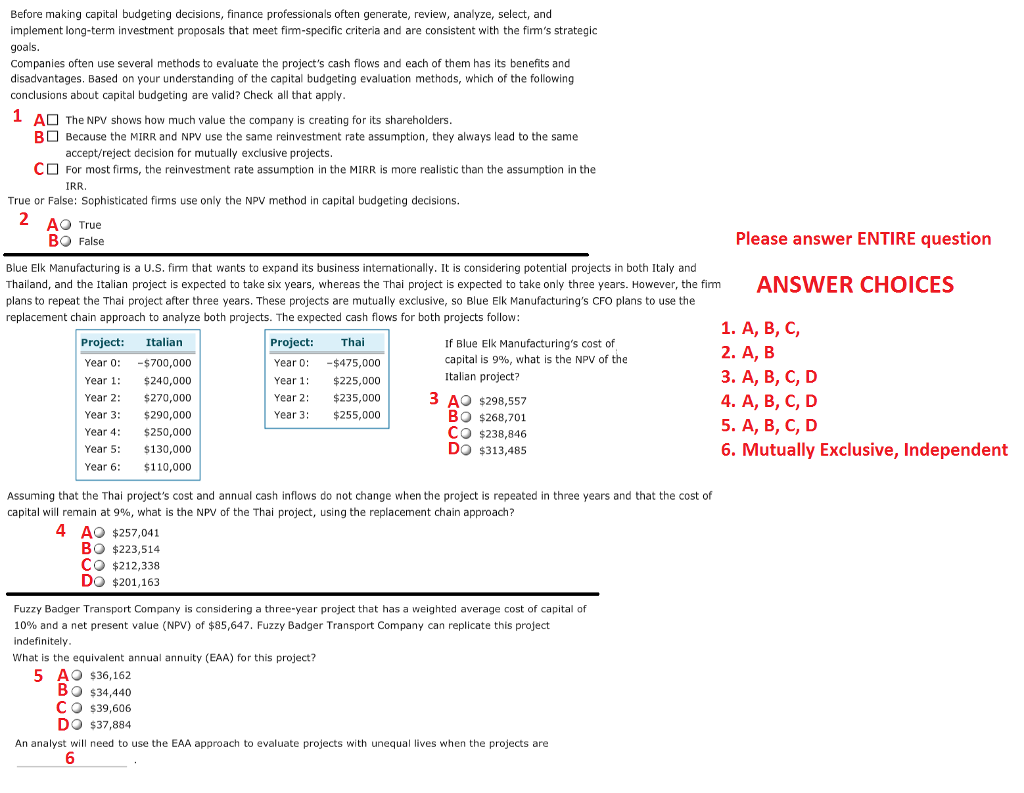
It involves analyzing potential projects or investments to determine their viability and expected returns. Think of it as a strategic roadmap that helps organizations decide whether to invest in new machinery, expand into new markets, or undertake major infrastructure developments. International capital budgeting is the process of evaluating investment projects that involve cash flows in different currencies and countries. It requires considering factors such as exchange rate risk, political risk, and different tax and regulatory environments. For payback methods, capital budgeting entails needing to be especially careful in forecasting cash flows.
- The availability and cost of different funding sources can influence project selection and timing.
- The articles and research support materials available on this site are educational and are not intended to be investment or tax advice.
- Owing to its culpability and quantifying abilities, capital budgeting is a preferred way of establishing if a project will yield results.
- PlanGuru is another software offering comprehensive budgeting and financial forecasting.
- To proceed with a project, the company will want to have a reasonable expectation that its rate of return will exceed the hurdle rate.
Such cloud systems substantially improve cash flow for your business directly as well as indirectly. In such as condition, the cash inflow rate equals the cash outflow rate. Although it considers the time value of money, it is one of the complicated methods. Capital budgets are geared more toward the long term and often span multiple years.
Let’s stick with the example above, which requires an initial investment of $2,000 and generates $900 per year for the next three years. Instead of using a single required rate of return of 10%, I allow the rate to change within a range, say from 0% to 25%. The decision criteria for capital budgeting encompass net present value (NPV), internal rate of return (IRR), payback period, profitability index (PI), and discounted payback period. In conclusion, assessing the correct discount rate to use in capital budgeting is critical as it significantly impacts the decision-making process. A miscalculation or misjudgment can lead to either missed investment opportunities or potential financial losses. Keeping this in mind, investors and financial managers must thoroughly understand the role of the discount rate in capital budgeting.
Regular monitoring is essential to ensure that the project stays on track. This involves continuously tracking the project’s performance against expected outcomes and forecasts, and taking corrective action as necessary. Capital budgeting is the process whereby a company decides its major, long-term investments such as purchasing property, buildings or equipment, or merging with or acquiring another company.
Let’s examine how capital rationing impacts various aspects of the capital budgeting process. Time value calculations help organizations understand how changes in interest rates affect project values and investment returns. This temporal perspective helps organizations compare projects with different cash flow patterns and timelines more effectively. The chosen discount rate directly influences key capital budgeting metrics like Net Present Value (NPV) and Internal Rate of Return (IRR).
A comprehensive cost analysis helps prevent budget surprises and ensures more accurate project evaluation. Manufacturers apply capital budgeting techniques to evaluate investments in new machinery, automation systems, and production line upgrades. Retailers utilize capital budgeting to evaluate new store locations, market expansion opportunities, and e-commerce investments.
Provides a comprehensive view of project risk by considering multiple variables simultaneously. Helps understand project performance under different market conditions. First, identify the initial investment and projected annual cash flows. Then, calculate cumulative cash flows year by year until they equal or exceed the initial investment. A project requiring a $50,000 initial investment expects cash flows of $20,000 annually for three years. If these cash flows yield an IRR of 15%, exceeding the company’s required return of 12%, the project would be considered financially attractive.